
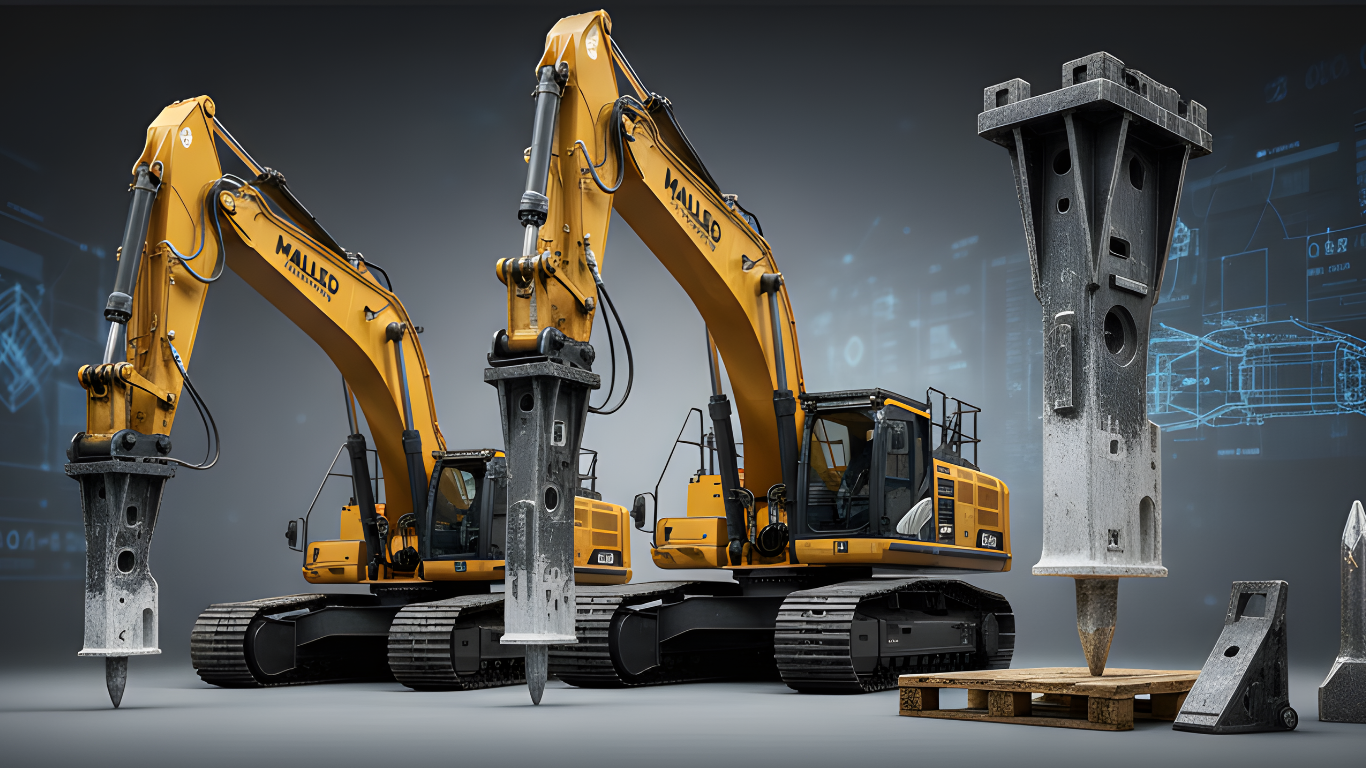
In mining, oversize rock isn’t just an obstacle; it’s a bottleneck. A single large boulder can halt a crusher, disrupt your entire material flow, and cost thousands in lost productivity.
The right hydraulic hammer is the most effective solution, but selecting the wrong one is a costly mistake that leads to inefficiency, carrier damage, and premature wear.
This guide cuts through the complexity. For mine managers and procurement officers, here is a clear, practical framework for selecting the optimal hydraulic hammer for your South African mining operation.
Step 1: Match the Hammer to Your Mine’s Excavator
The most critical rule is compatibility. An oversized hammer will shock and damage your excavator’s front-end and hydraulics, while an undersized one will be ineffective and wear out rapidly.
The Gold Standard: Carrier Weight Class
Your excavator’s operating weight is the primary indicator. Here’s how to match a Malleo Equipment hammer to common mining carriers:
-
For 25-32 Ton Excavators: Ideal for general secondary breaking. A model like the Malleo SD 300S (2,454 kg) provides the perfect balance of power and control without overstressing the machine.
-
For 30-42 Ton Excavators: Stepping up in power for tougher, more abundant oversize. The Malleo SD 400S (3,020 kg) delivers higher impact energy to break larger rocks faster.
-
For 45-100+ Ton Excavators: For the largest operations and most challenging oversize. The heavy-duty Malleo SD 500S (4,120 kg) and SD 800S (7,415 kg) are built to deliver maximum impact (up to 16,740 joules) on the biggest mining excavators.
Pro Tip: Always refer to the manufacturer’s recommended carrier weight range. This is your first and most important filter.
Step 2: Select the Right Tool for the Rock Type
Not all rock is created equal. The geology of your mine dictates the optimal tool (moil) for your hammer. Using a blunt tool on hard, abrasive rock is a recipe for slow progress and high consumable costs.
-
For Hard, Abrasive Rock (e.g., Kimberlite, Quartzite): A Pointed Moil is essential. Its concentrated tip focuses immense impact energy to fracture the toughest materials efficiently.
-
For Laminated or Fractured Rock (e.g., some Gold Reef, Shale): A Wedge Moil is often more effective. It uses a spreading force to pry apart natural fracture lines and break the rock along its planes.
-
For Slag Breaking or Heavy-Duty Demolition: A Blunt Tool delivers a wide, spreading impact ideal for breaking up brittle materials and concrete.
Malleo Equipment supplies a full range of high-quality, heat-treated moils to ensure you have the right cutting edge for the job, maximising both breaking speed and tool life.
Step 3: Verify the Hydraulic Handshake: Flow & Pressure
A hydraulic hammer is only as powerful as the hydraulic system that feeds it. Mismatched hydraulics are a primary cause of poor performance.
-
Required Oil Flow (l/min): Your excavator must be able to supply the hammer’s required flow. Insufficient flow results in a slow, “lazy” impact rate. Too much flow can damage the hammer’s internal components.
-
Operating Pressure (bar): The hammer is designed to operate within a specific pressure range. This directly correlates to its impact energy. Your carrier’s hydraulic system must be capable of reaching and maintaining this pressure for the hammer to deliver its rated power.
The Malleo Advantage: Our technical specifications are clear and detailed. When you consult with us, we ensure your carrier’s hydraulic system is perfectly matched to your chosen hammer, guaranteeing you get the full power and efficiency you paid for.
The Malleo Equipment Selection Promise: A Consultative Partnership
Selecting the right tool isn’t just about reading a chart; it’s about understanding your specific operational challenges. At Malleo Equipment, we go beyond simply taking an order.
We provide a consultative selection process that includes:
-
Site-Specific Analysis: We discuss your primary rock type, average oversize dimensions, and production goals.
-
Carrier Compatibility Check: We verify the make and model of your excavator to ensure a perfect fit.
-
Total Solution Offering: We provide the hammer, the right moils, and the critical after-sales support to keep it running.
Don’t let oversize rock oversize your problems. Making the correct hydraulic hammer selection is a strategic decision that pays dividends in increased throughput, reduced crusher downtime, and a lower cost per ton broken.
Equip your mine with confidence. Contact a Malleo Equipment expert today for a personalised hammer selection consultation tailored to your mine’s unique needs.
